

Adolescent Emotional Wellness Program

Empowering teens to build greater emotional awareness, resilience, and well-being, with guidance from a licensed psychologist
A six-week, interactive experience designed to build emotional awareness and self-regulation in teens holistically

click to read more
Week 1 - Sleep Hygiene and Nutrition
Building healthy sleep routines and balanced nutrition to support emotional well-being
Week 4 - Regulating Emotional Responses
Pausing before reacting; using strategies to regulate and respond with intention
Meet Zenomi: learning platform, clinician-guided adolescent wellness program
Who is this program for?
How does it work?
Do you think your teen could learn healthier habits?
Would your teen benefit from learning about emotional health, resilience, and communication?
Does your teen have variable sleep and eating patterns and you don’t know how to help them?
Do you want your teen to thrive, find their potential, and reach their personal goals?
Does your teen not need therapy, but you want to be proactive in giving them insights into their own patterns and how to best take care of themselves?
If you answered YES to any of the questions above, the Zenomi wellness program, offered by Dr. O’Shea, may be right for you and your teen!
Complete an assessment
The clinician enrolls the teen in the program and schedules the 4 appointments. The parent/teen downloads the app to their device. The teen then completes brief, structured questionnaires on the app: sleep, nutrition, validated anxiety and depression measures, and emotional intelligence.
Begin support
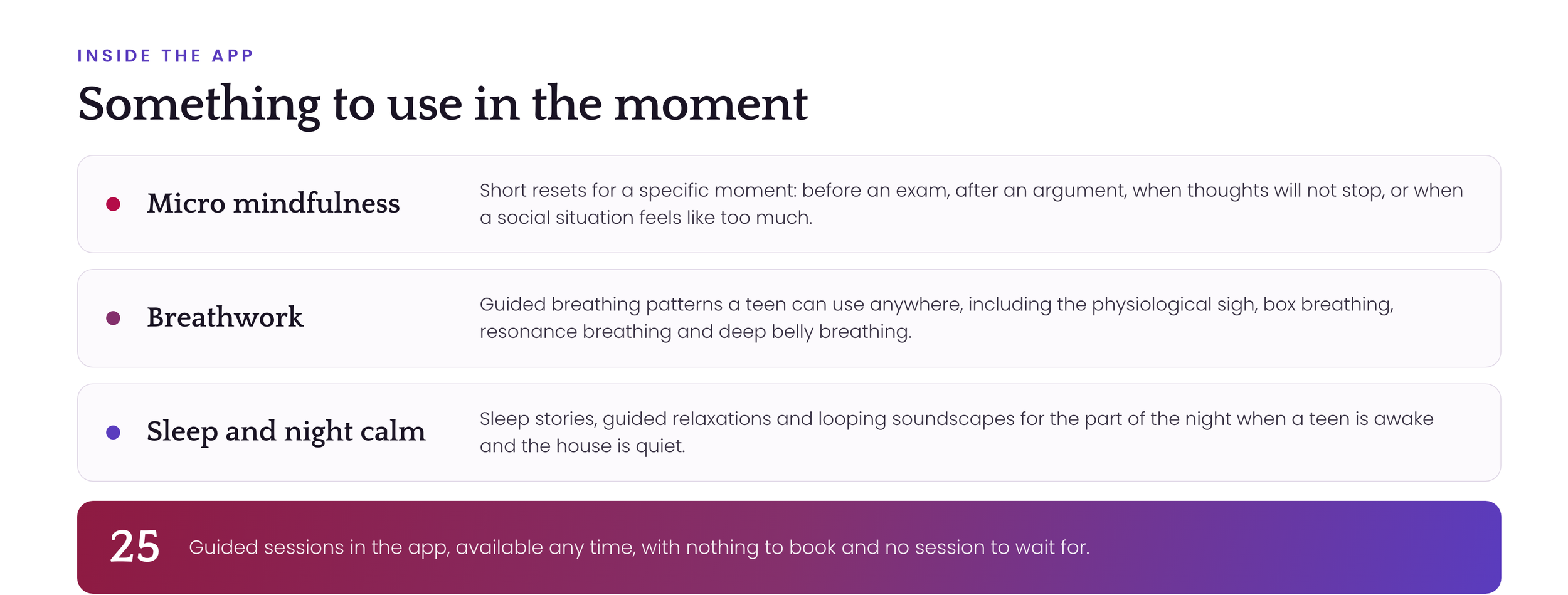
The clinician then guides the teen toward relevant microlearning content and mindfulness tools that support their individual needs. Learning modules are available on the Zenomi platform and include content specifically designed for teens. Your teen will access interactive lessons at their pace and complete daily check-ins on the app.

Receive timely insights
Within minutes, the referring clinician receives a detailed summary to help inform the first conversation. At the first appointment, the conversation will review your teen’s patterns, areas of strength, and areas for improvement in an interactive, collaborative format. Time will be split between meeting with the teen and briefly reviewing results with the parent.
Of Note: If there are any immediate, urgent needs or specific concerns about the emotional or physical health or safety of the teen that arise in the meeting, the clinician will inform the parent/guardian and make recommendations based on clinical judgment
Checking in along the way
Three additional check-in sessions are scheduled throughout the course, where your teen will meet with the clinician to review the lessons they have completed, answer questions, and provide additional insight. The clinician will help the teen set and approach personal goals based on what they have learned, check in on previous goals and strategies, help navigate any roadblocks, and provide motivational support.
What will teens learn?
Each week builds practical, real-life skills
Also…
FAQs
Week 2 - Understanding Emotions
Why emotions happen; how thoughts, feelings, and behaviors connect
Week 5 - Communication & Boundaries
Expressing feelings clearly; navigating conflict and peer pressure
Dr. O’Shea can provide additional recommendations for ongoing supports through psychotherapy or other types of resources or consultations with relevant providers, if appropriate
-
Sessions are held at Dr. O’Shea’s office in Cary, NC or via telehealth.
Telehealth services are conducted via a secure, HIPAA-compliant platform.
-
Sessions are usually scheduled approximately 2 weeks apart during Dr. O’Shea’s regular office hours, which are generally between 9am and 4pm on most weekdays.
-
Dr. O’Shea has a PSYPact designation, allowing her to practice in 40+ states. To see if your state is on the list, click here
-
The fee for the two evaluations and access to the app and learning platform is $125.
Each 45-minute session with Dr. O’Shea is $200, for a total of $800 for the 4 sessions (a discount of 10% off her usual therapy rate).
Total investment: $925
-
No. Dr. O’Shea is out of network with all insurance plans, and insurance does not cover wellness services if there is no billing diagnosis.
-
• Dr. O’Shea is an enrolled provider for the ESA+ scholarship and is approved to accept ESA+ scholarship funds.
• This service can be considered an educational therapy. Dr. O’Shea will provide an invoice prior to beginning the program so you can confirm if it is covered.
• If you are going to use ESA+ funding, the invoice is required to be submitted and approved prior to starting. Otherwise, a backup credit card will need to be on file.
•Please be aware that not all services offered may meet the criteria for qualifying education expenses under the ESA+ scholarship. Prior to committing to a service, families are encouraged to reference ESA+ guidelines and contact [email protected] for support.
• For more information on the ESA+ scholarship, visit: https://k12.ncseaa.edu.


Week 3- Emotional Awareness & Empathy
Identifying triggers, recognizing early warning signs, and understanding others’ feelings
Week 6 - Resilience & Habits
Creating a personal toolkit; maintaining progress beyond the program
Your teen will have new insights, strategies, and tools to continue using.
Your teen will likely see changes in their sleep, nutrition, emotion regulation, and personal connections, which can support better attention, focus, and feeling less easily overwhelmed.
If your teen would like to continue seeing Dr. O’Shea for therapy, they may be able to do so (depending on Dr. O’Shea’s current ongoing availability)
What happens at the end of the program?
Your teen completes a second assessment, and Dr. O’Shea will review the results together to see what has changed and continued goals for growth.